 Alhambra Private Tours
The Alhambra Night Visit: What It Is, and Whether to Book It
The Alhambra night visit is a second monument that shares a name with the first. Two or three nights a week, the Alhambra reopens after dark and runs a different monument: the palaces lit from within, the gardens still and cool, the crowds thinned to a fraction of the day's. At €12.73 the night visit is also the cheapest ticket the Patronato sells. This page explains what the night route actually includes (it changes by season), how its tickets and time slots work, and the honest case for booking it instead of - or, better, beside - the daylight visit. The full listing table sits in the main comparison. The full listing table sits in the main comparison.
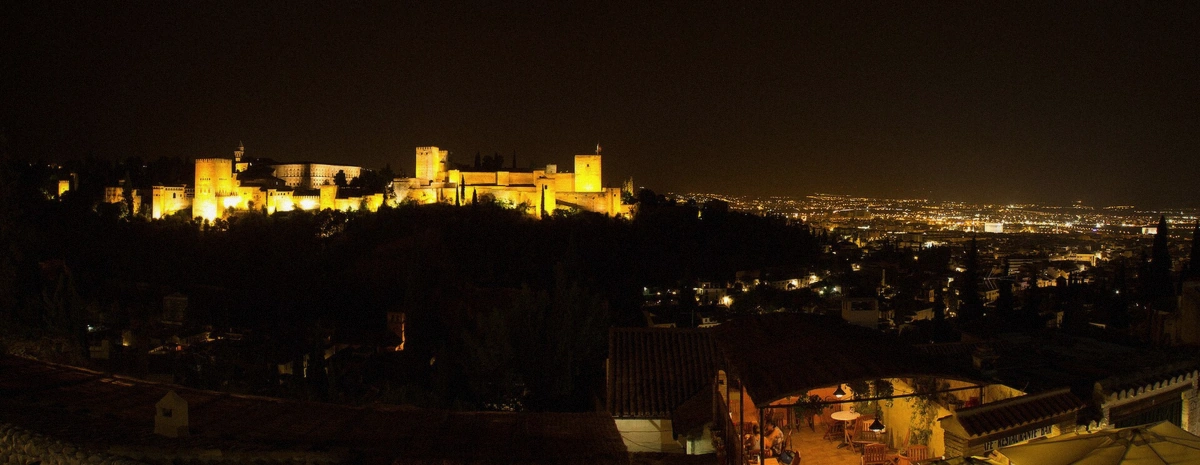
The monument after dark: the night visit’s own city - lit paths, thin crowds, mountain quiet.
Quick answer What the €12.73 night ticket covers, and the one rule about doing both
The night visit is a separate €12.73 ticket running roughly 22:00-23:30 on two or three nights a week, with two different products by season: in winter the Nasrid Palaces lit route (the famous interiors by floodlight, about an hour), in summer the Generalife gardens route (the lit water gardens, palaces not included - check your date's version before booking). Crowds are a fraction of daytime and photography is permitted without flash. The rule: the night visit does not replace the day - it is a second, quieter monument. First-time visitors should still book the daytime Alhambra General (from the official office, or as one of the the listings compared here we compare) and treat the night as the encore.
Key takeaways
- Know your season: winter = lit palaces; summer = lit gardens. The two are different products on the same ticket name.
- Still €12.73 in 2026 - and sold from the same official office with name-matched rules.
- The encore rule: night is for the second visit or the long stay - see doing both.
Two Night Products, One Name
The night visit's biggest trap is assuming it is one thing. What opens after dark depends on the season's conservation calendar, and the two products are different enough to deserve different names.
| Season | Night route | What you see | Typical run |
|---|---|---|---|
| November - March (winter) | Nasrid Palaces by night | The lit palace circuit: Mexuar, Comares, the Court of the Lions - about an hour with a fixed-entry slot | Friday and Saturday nights, roughly 22:00 entry |
| April - October (summer) | Generalife gardens by night | The lit water gardens and terraces - the palaces are NOT on the summer night route | Thursday-Saturday nights |
| Both | Ticket €12.73 | Name-matched, slot-timed, bought from the official office | Closed entirely 25 December and 1 January |
Which night product is better
For first-time visitors, the winter palaces route is the stronger product: the Comares hall and the Lions court by floodlight are the monument at its most theatrical, and winter's thin crowds make the rooms feel private. The summer gardens route is a lovely evening - water, night-scented jasmine, the city lit below - but it is not "the Alhambra" in the sense most visitors mean. Travellers in summer who want the interiors after dark are out of luck; the day-visit route is the fix.
Night Logistics: Slots, Meeting Points, Safety
The night visit runs on the same time-slot logic as the day, scaled down and slowed up.
The slot
Night tickets print a fixed entry time - typically 22:00 or 22:30 - and the same half-hour discipline applies: arrive at the appointed gate in the window, name-matched documents in hand. The winter palace route admits through the same Access Pavilion area as the day visit; follow the night signage rather than the day queues.
Getting back down
The C30 runs reduced evening service; the walk down to Plaza Nueva takes fifteen easy minutes - all downhill, lit, and safe, with the walls above you. Taxis wait at the pavilion roundabout on visit nights. Plan the restaurant reservation for 23:45, not 22:30, and you will dine like a local on the timing.
Kit for the dark
Comfortable shoes for dimlit cobbles, a layer for mountain air (Granada's nights cool fast at 700-800 metres, even after a 34°C day), and a phone camera only - tripods are barred, flash is barred, and the low-light mode on a modern phone is the honest best tool for the lit courts.
Is the Night Visit Worth It?
Honest answer, split by traveller. Yes, absolutely, for: photographers (the lit palaces are the best low-light subject in Andalusia); return visitors who have done the day and want the monument's second personality; travellers who struggle with crowds, which the night route reduces to a scattering; and romantics, who are the audience the Patronato implicitly priced it for. Not worth it for: first-timers on a single visit - the daylight Alhambra General carries the full complexity, the guide storytelling and the gardens, none of which the night route replaces; and budget travellers choosing between the two - the day ticket is the one that includes everything.
The best-time guide covers how the day slot and the night route can share one trip without competing.
What the night visit is not
It is not a full monument ticket: the Alcazaba and the Charles V palace are not on the night route in either season. It is not a guided tour by default - the night visit sells as admission, with guides as an add-on product on some departures. And it is not available every night: two or three nights weekly, with the schedule thinning in the deepest winter weeks - check the official calendar for your dates before building an evening around it.
Doing Both: The Day-and-Night Pattern
The pattern that works for travellers with two evenings in Granada: daylight visit on arrival day (booked two to three months out in season - the comparison lists who guides it well), night route on the second evening, chosen by season - palaces in winter, gardens in summer. The pairing works because the two monuments barely overlap: the day gives you the complex's architecture and story; the night gives you its theatre. Travellers with a single day should skip the night entirely and spend the evening on the San Nicolás mirador instead - the lit walls from across the Darro are the free version of the same magic.
The Summer Gardens Route, Described
Because the summer night product is the gardens, it deserves its own description rather than a footnote. The route opens into the Generalife after dark: the Acequia courtyard’s water channel lit from beneath so the whole patio floats on moving reflection, the hedges reduced to perfume - jasmine and wet stone - and the terraces carrying small groups who speak the way people speak in churches. The water stairway runs its channels in the dark, which is the visit’s surprise pleasure: a staircase you hear before you see.
The palaces are absent - the lit circuit runs winter only - and the product knows it: the gardens route is about the monument’s water-engineering soul, the system of channels and drops that made the hill a paradise in the first place. Travellers who want the famous rooms after dark should book the winter route or the day; travellers who want the hill at its most atmospheric should book the summer night and let the palaces keep their daylight audience.
Practical Night Craft: Timing, Warmth, the Descent
Three practicalities separate a good night visit from a cold one. Timing: the 22:00 window’s first half hour is the visit’s best - the earlier departures thin by 22:40, and the last slot’s visitors inherit the monument almost alone; conversely the gardens route in July rewards the latest slot, when the day’s heat has fully left the stone. Warmth: Granada’s altitude is honest after dark - a 30°C day becomes a 14°C night in May, and winter nights run near freezing, so the layer you计算 for the day’s dawn is the layer the night demands; the kit list covers it with one amendment - gloves in winter, because the railings are stone.
The descent: the Cuesta de Gomérez at midnight is safe, dark and atmospheric; a phone torch helps the gravel sections, and the taxis at the pavilion roundabout thin out after the last slot - the walk down is the better plan and the better ending.
Who the Night Visit Serves - and Who It Doesn’t
The night product sorts travellers cleanly, and knowing your side of the sort saves a booking. It serves: photographers, who get the monument’s best low-light hour with crowds too thin to matter; return visitors, who have done the daylight complexity and want the theatre; crowd-sensitive travellers, for whom even the day’s capped flow is too much; and couples building an evening - the route is Granada’s most reliable romantic product. It does not serve: first-timers on one visit (the daylight Alhambra General carries everything the night cannot - the Alcazaba, the Charles V, the guide storytelling, the gardens’ detail); travellers needing guaranteed palaces in summer (the summer night is gardens only); and budget travellers choosing between the two - the day ticket is the fuller spend.
The one-line test: if you have already seen the rooms by day, the night is the best €12.73 in Spain; if you have not, the day is the visit and the night is the encore.
The Night Visit Against the Rest of the Market
Price the night honestly against its alternatives and its value sharpens. Against the €22.27 day ticket: the night costs 43% less and delivers one lit circuit instead of the whole hill - a trade, not a bargain. Against the €12.73 gardens day ticket: identical price, different hour, and travellers choosing one Alhambra visit on a summer night should know the gardens-by-night beats the gardens-by-heat at the same money.
Against a private day tour at $113-464: different species - the private product is guided, handled and complete; the night is self-guided atmosphere. The market position the night visit occupies is deliberately the cheapest door into the monument, and the Patronato prices it as an invitation: travellers who fall for the Alhambra by night almost always return for the day, and the ticket office knows it.
Three Night-Visit Mistakes, Pre-empted
The night booking produces its own small crop of avoidable errors, and all three are calendar failures. Booking the night route for the palaces in July - the summer product is the gardens; check the season before paying. Building the evening on the wrong night - the route runs two or three nights weekly, and the calendar published on the official platform is the only source; a night visit planned for a Tuesday the route does not run is a free evening with extra steps.
And underestimating the descent - the walk down is fifteen pleasant minutes at 23:30 in May and a cold, dark trudge in January; book the knowledge into the plan with the descent notes and the evening ends as well as it ran.
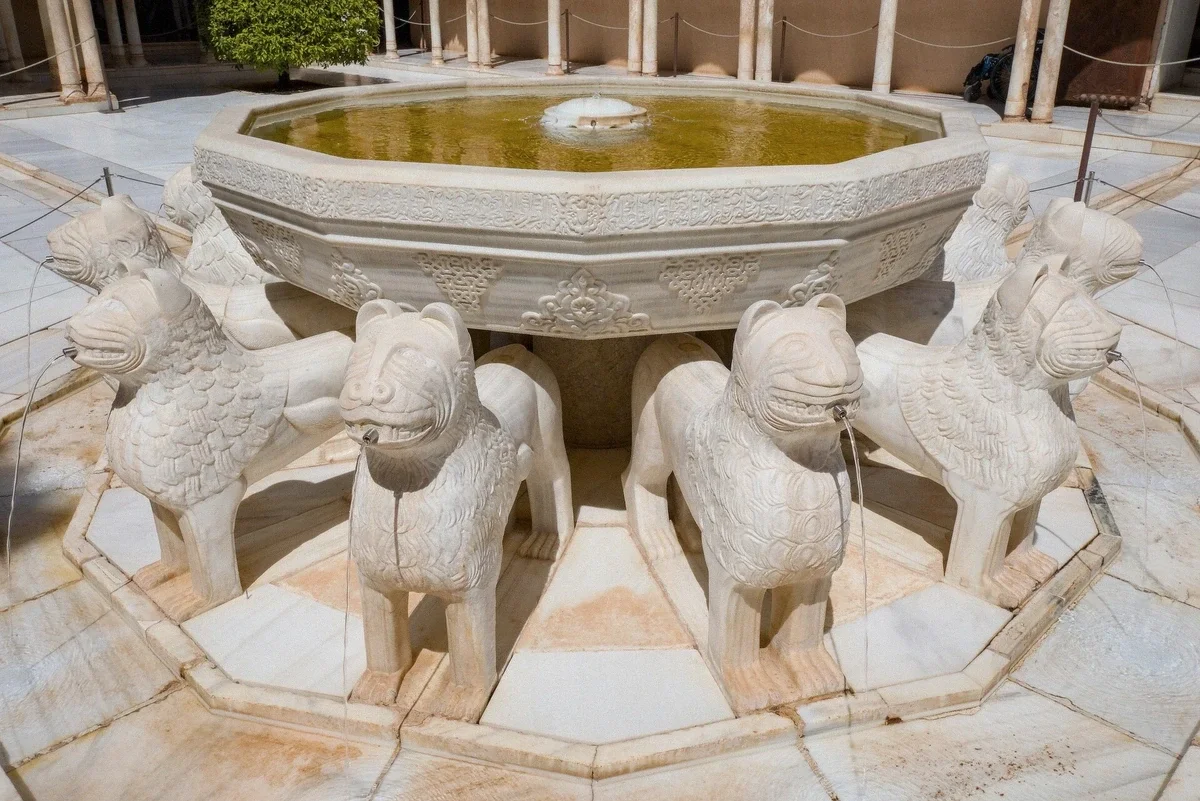
The Lions’ fountain by night: the winter route’s centrepiece, and the strongest argument for a second visit.
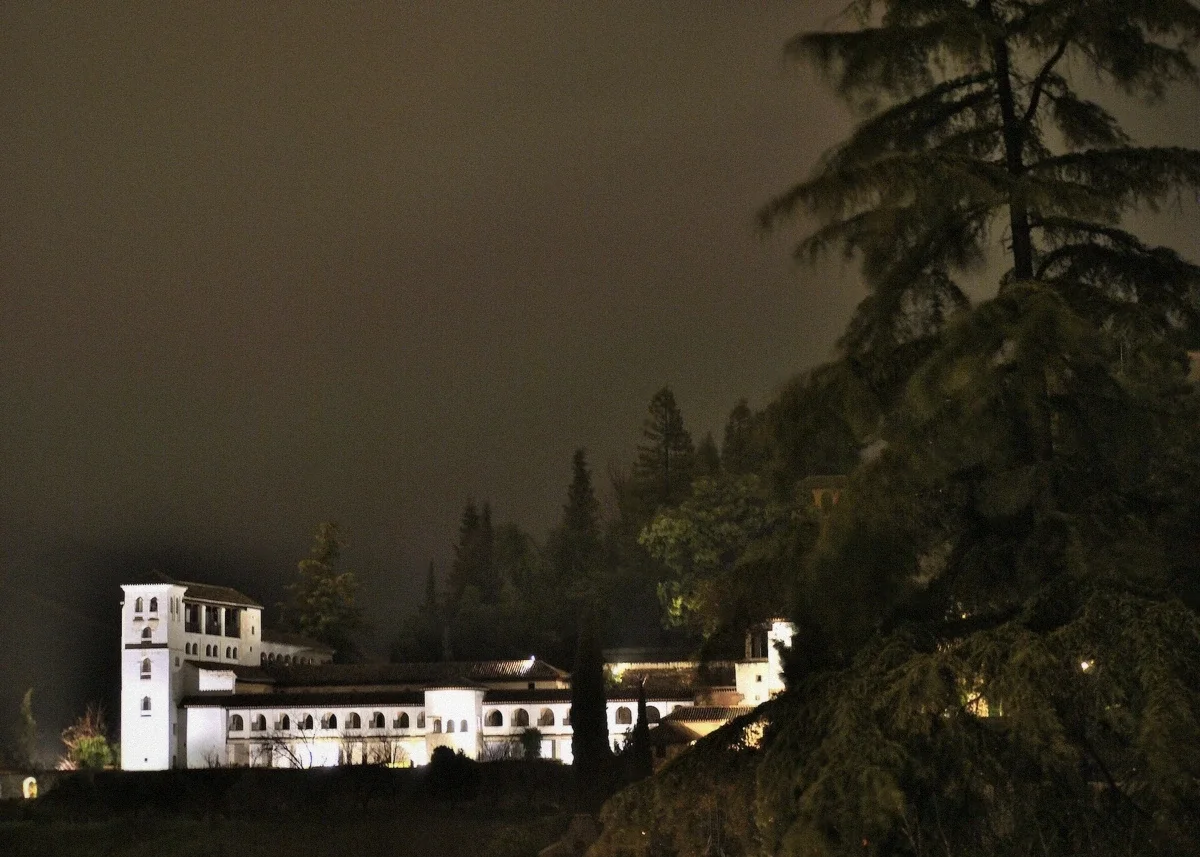
The Generalife from the Parador side: the summer night route’s territory, when the gardens carry the visit.
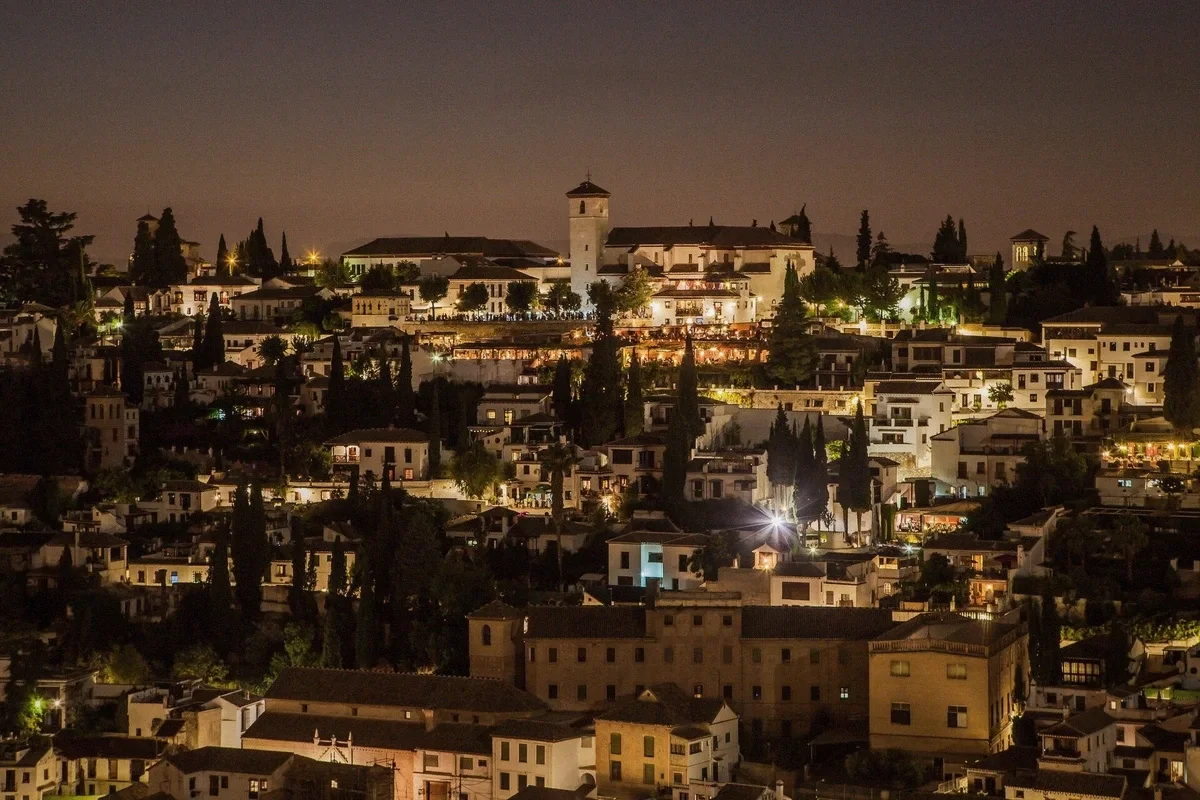
The lit towers from the valley: what the night visit looks like from every mirador in the city.
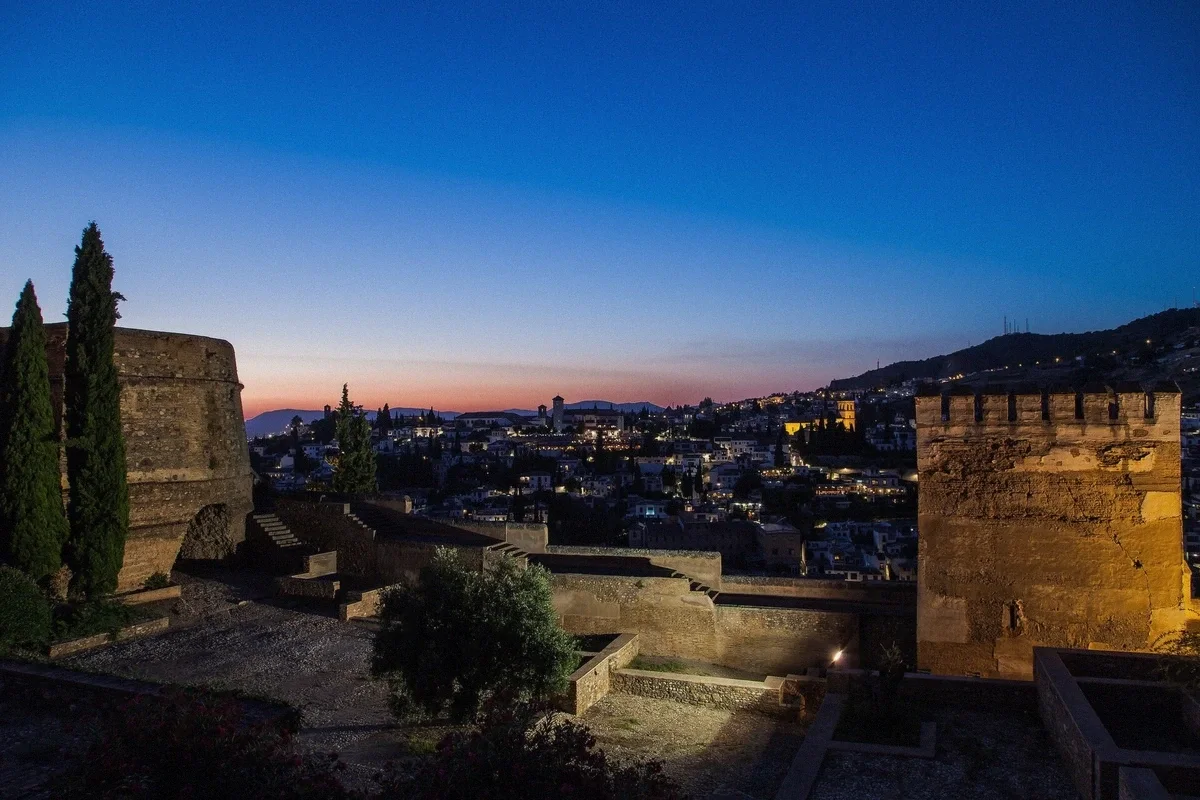
Last light on the gardens: the hour the night route inherits, and the day visit’s best exit.
Night Visit Questions
What are some things to do in Granada at night?
The Alhambra night visit (22:00-23:30 on its operating nights) is the headline, and the free alternative is the San Nicolás mirador view of the lit walls. Add the tapas streets off Plaza Nueva and a flamenco tablao in Sacromonte, and the evening is full without repeating the day.
Can I visit the Alhambra for free?
No - the free-entry days the monument once ran have ended; every visit, day or night, is ticketed (children under 12 excepted, with a reserved seat). The cheapest legitimate ticket is the €12.73 gardens product by day or the night visit, and the walls themselves are visible for free from the Albaicín miradors.
Is the Alhambra night visit the palaces or the gardens?
Depends on the season: winter nights open the Nasrid Palaces lit circuit; summer nights open the Generalife gardens route without the palaces. Check which product your date sells before booking - they are different visits under one ticket name.
Is the night visit worth it if I already have a day ticket?
Yes - for photographers, romantics and crowd-averse travellers it is the monument's best hour, and the two experiences barely overlap. Skip it only if your trip is short enough that the evening belongs to Granada's other pleasures.
How do I get to the Alhambra at night?
The same pavilion area as by day: an evening C30 service, a taxi to the roundabout, or the fifteen-minute downhill walk back afterwards. The gates and night signage handle the rest; name-matched documents ride along exactly as in daylight.
A Walk Through the Winter Palace Route
The winter night circuit, hour by imagined hour: entry at the appointed gate in the 22:00 window, the crowd a few hundred against the day’s thousands. The Mexuar first, its courtyard lit from below so the tower shadows fall inward. The Comares hall’s ceiling under warm floodlight - the cedar dome reads differently at night, the geometry sharper, the crowd noise absent enough to hear the building.
Through the Myrtles courtyard, the pool doubling the lit facade in the still water - the photograph the night visit sells, and it looks exactly like that. Then the Court of the Lions, night’s centrepiece: the lantern light through the 124 columns, the fountain murmuring under a sky the day never shows. Out through the gardens, the city glittering below the walls.
Total: about an hour, unhurried, and unlike anything the daylight visit does.
Photography at Night: What Works
The night visit rewards a phone more than a camera bag. The lit interiors sit in a light range modern computational phones handle beautifully - the Myrtles pool reflection and the Lions court are one-tap photographs - while tripod-mounted long exposures are barred anyway. Three practical notes: shoot in the first twenty minutes of the window, before the room’s ambient warmth fogs lenses moving between cold exterior and lit interior; expose for the lights, not the shadows, and let the dark be dark - the night visit’s compositions are about pools of light; and save battery, because mountain nights drain phones fast and the exit path is unlit by design.
Flash, tripods and selfie sticks follow the same bans as daytime; nobody misses them.
Ticket Mechanics, Precisely
The night ticket’s fine print differs from the day’s in four ways worth knowing. It is sold per-night with a fixed entry time (22:00 or 22:30 typically), not a half-hour window class - arrive inside your printed slot. It is name-matched like every Alhambra ticket; passports travel.
It does not combine: a night ticket adds nothing to a day ticket and vice versa - the two visits are separate products. And its calendar is its own: two or three nights weekly, shifting with the conservation calendar and the seasons (palaces in winter, gardens in summer), with the schedule for each month published on the official platform - check it before building a Granada evening, because the night route’s dark nights outnumber its lit ones.
Pairing the Night Visit with a Granada Evening
The night visit anchors the best evening Granada offers. The pattern: late tapas at 20:30 in the streets off Plaza Nueva - the city dines late and so should you - a slow climb or taxi to the pavilion for 21:45, the route itself at 22:00, and the walk back down the Cuesta de Gomérez through the midnight woods to a table reserved for 23:45. Flamenco works the night after instead: the tablao schedules run past midnight and compete for the same energy.
What does not pair: the San Nicolás mirador before the visit - save the lit walls from across the gorge for the walk home, when the monument you have just left becomes the postcard above the city.
The Season Schedule in Detail
The night product’s shape follows the conservation calendar, and the detail matters at booking. The winter palaces route runs roughly from late October to early March, Friday and Saturday nights thickening to three nights in the Christmas and Easter holidays - the lit interiors are the reason the winter trip earns its cold. From spring through early autumn the product shifts to the Generalife gardens: the palaces rest, and the lit water gardens run on more nights, typically Thursday to Saturday, with the season’s longest evenings making the 22:00 start feel civilized.
The deep-winter weeks thin to one or two nights and the full fortnight around 25 December and 1 January closes entirely - the monument’s only guaranteed dark. Every season’s exact nights are published monthly on the official site, and they are the first thing to check and the last thing to trust from memory.